Strike the right balance of rigor, achievability, risk and reward
Incentive plan goals that are too easy, too difficult, or inconsistently calibrated can create unexpected payouts and increase reliance on discretion.
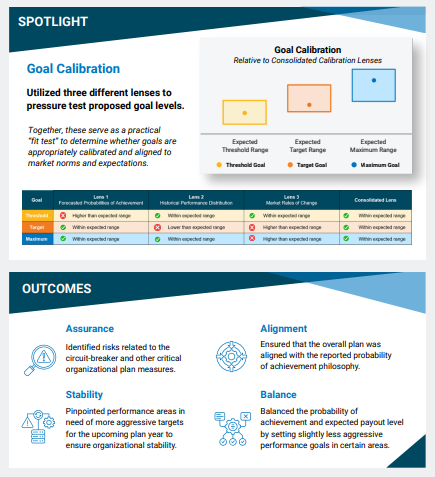
SullivanCotter’s Probability of Achievement Analysis offers an independent, data-driven way to test whether your goals are properly calibrated before the plan is finalized.
We evaluate the likelihood of achieving each performance goal on its own, then use those goal-by-goal probabilities to calculate the expected aggregate payout of the overall incentive plan. Our experienced consultants combined historical performance, forecasted probabilities, and market rates of change.
The result: A more balanced incentive plan, stronger alignment with your organization’s goal-setting philosophy, and greater confidence for both management and the board.
See how this analysis works in action!
CASE STUDIES


Ready to strengthen how performance is measured and rewarded?
SullivanCotter helps health care organizations bring discipline and clarity to performance measurement, goal setting, and incentive design. Leveraging proprietary benchmarking data and deep industry insight, we work with boards and executives to define meaningful performance measures and align them with organizational priorities.
See how we can support you >